The Visual Trial
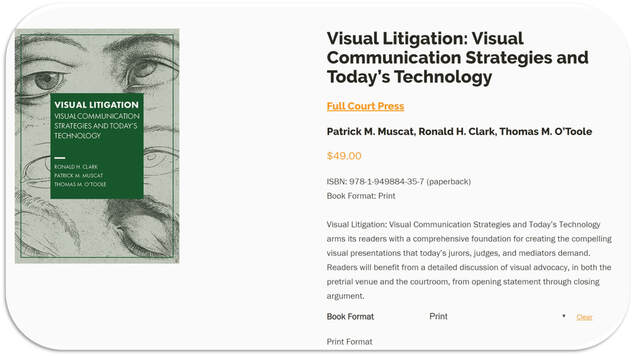
Check out my new book about the visual trial. It's designed to be used in conjunction with a visual trial law school course.. https://www.fastcase.com/store/fcp/visual-litigation-visual-communication-strategies-and-todays-technology/ |
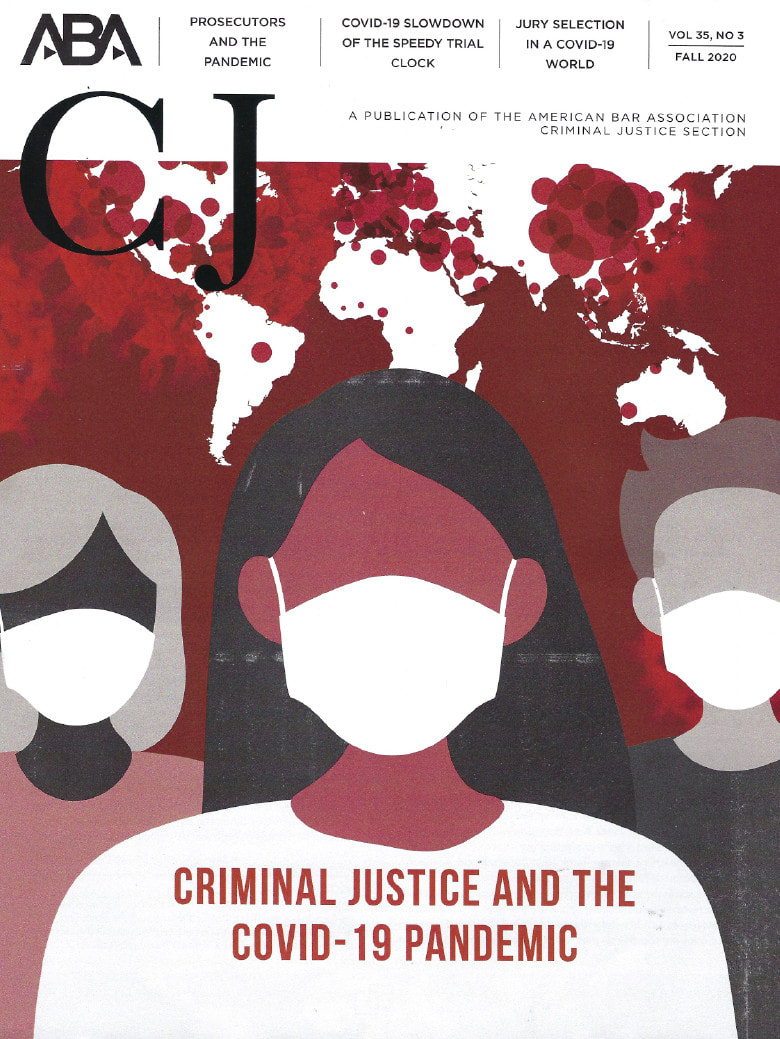
See Pat's contribution on page 19 and 20 along with a linked video. For his video interview visit https://pceinc.org/talking-with-apa-pat-muscat-about-how-the-wayne-county-mi-prosecutors-office-developed-a-paperless-system-on-the-fly/
Download the full article here:

| ||
Feedback from past sessions:
"It was hands down the best MCLE presentation by a practitioner that I have experienced in my 39 years as a prosecutor, defense lawyer, and as a former judge . . . "
"Best presentation of the conference."
"Whatever you do, bring him back."
"Most useful of the conference."
"Amazing presentation"
"Content was great! This presenter kept my attention the whole time. He was interactive with the audience and was quite informative."
"GREAT JOB !! got some GREAT INFO to take back to the office with Thank You"
"I am not very knowledgeable with computers and I found the presentation very interesting and helpful. I would recommend Muscat's training to my colleagues."
"I really liked his presentation. He was knowledgeable, funny, and well prepared. He like to add in jokes and keep it fresh and different. I imagine he is really good in court."
"In my opinion, this was the best presentation of the Conference. I believe this information will be extremely useful in future investigation."
"Great info. Appreciate the info."
"Thanks. Learned a lot that will help with my presentations."
"Knowledgeable."
"Excellent use of technology."
"Good speaker."
"Professional, yet funny at the same time."
"It was hands down the best MCLE presentation by a practitioner that I have experienced in my 39 years as a prosecutor, defense lawyer, and as a former judge . . . "
"Best presentation of the conference."
"Whatever you do, bring him back."
"Most useful of the conference."
"Amazing presentation"
"Content was great! This presenter kept my attention the whole time. He was interactive with the audience and was quite informative."
"GREAT JOB !! got some GREAT INFO to take back to the office with Thank You"
"I am not very knowledgeable with computers and I found the presentation very interesting and helpful. I would recommend Muscat's training to my colleagues."
"I really liked his presentation. He was knowledgeable, funny, and well prepared. He like to add in jokes and keep it fresh and different. I imagine he is really good in court."
"In my opinion, this was the best presentation of the Conference. I believe this information will be extremely useful in future investigation."
"Great info. Appreciate the info."
"Thanks. Learned a lot that will help with my presentations."
"Knowledgeable."
"Excellent use of technology."
"Good speaker."
"Professional, yet funny at the same time."
|
|
I served the citizens of Wayne County for 30 years. I began my career at the WCPO during my second year of law school eventually switching to night school to work full time in our Juvenile Division. I spent eight years assigned to our office's homicide unit vertically prosecuting complex homicide cases.
Formerly served as the Chief of the Special Prosecutions Division, overseeing the Homicide Unit, the Major Drug Unit, the Community Prosecution Unit, Operation Legend, and our Crime Lab Liaison Unit.
I also handled special projects for our office. One of the special projects that I have worked on is the implementation of Body Worn Cameras and cloud video evidence storage in our jurisdiction.
I was the office's rep to the Department of Justice regarding the DOJ's Violence Reduction Network. https://www.bja.gov/Programs/VRN.html
In my career I have used courtroom technology, non-linear litigation software, and PowerPoint in all my trials while also assisting others in the office with their cases.
www.cnn.com/2014/08/07/justice/michigan-porch-shooting-trial/
https://en.wikipedia.org/wiki/Shooting_of_Renisha_McBride
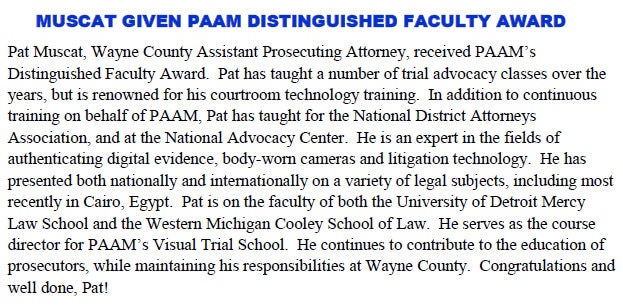
I enjoy working with lawyers, law enforcement officers, defense attorneys, schools and law students around the world regarding the use of non-linear litigation software, PowerPoint, general courtroom technology, and trial advocacy. I am a member of the National College of District Attorney's faculty, the Association of Prosecuting Attorney's faculty, and the Prosecuting Attorney's Association of Michigan faculty.
On September 22nd, 2017, I served as a subject matter expert and presenter for the Indiana Attorney General's Summit on Forensic in the Courts and the PCAST Report. In October of 2018, I presented at the International Association of Prosecutor's Regional Conference in Toronto, Canada. In December of 2018, I returned to Egypt to conduct a Train the Trainer course.
In 2020, I was appointed to the National District Attorney's Association Campaign on Digital Safety Board.
NDAA Announces National Campaign on Digital Safety Advisory Board
On Wednesday, December 18, 2019, NDAA announced the creation of a national advisory board to combat online abuse, digital scams, human trafficking, and other technology related issues that impact public safety.
https://ndaa.org/press-release-ndaa-announces-national-campaign-on-digital-safety-advisory-board/
Formerly served as the Chief of the Special Prosecutions Division, overseeing the Homicide Unit, the Major Drug Unit, the Community Prosecution Unit, Operation Legend, and our Crime Lab Liaison Unit.
I also handled special projects for our office. One of the special projects that I have worked on is the implementation of Body Worn Cameras and cloud video evidence storage in our jurisdiction.
I was the office's rep to the Department of Justice regarding the DOJ's Violence Reduction Network. https://www.bja.gov/Programs/VRN.html
In my career I have used courtroom technology, non-linear litigation software, and PowerPoint in all my trials while also assisting others in the office with their cases.
www.cnn.com/2014/08/07/justice/michigan-porch-shooting-trial/
https://en.wikipedia.org/wiki/Shooting_of_Renisha_McBride
I enjoy working with lawyers, law enforcement officers, defense attorneys, schools and law students around the world regarding the use of non-linear litigation software, PowerPoint, general courtroom technology, and trial advocacy. I am a member of the National College of District Attorney's faculty, the Association of Prosecuting Attorney's faculty, and the Prosecuting Attorney's Association of Michigan faculty.
On September 22nd, 2017, I served as a subject matter expert and presenter for the Indiana Attorney General's Summit on Forensic in the Courts and the PCAST Report. In October of 2018, I presented at the International Association of Prosecutor's Regional Conference in Toronto, Canada. In December of 2018, I returned to Egypt to conduct a Train the Trainer course.
In 2020, I was appointed to the National District Attorney's Association Campaign on Digital Safety Board.
NDAA Announces National Campaign on Digital Safety Advisory Board
On Wednesday, December 18, 2019, NDAA announced the creation of a national advisory board to combat online abuse, digital scams, human trafficking, and other technology related issues that impact public safety.
https://ndaa.org/press-release-ndaa-announces-national-campaign-on-digital-safety-advisory-board/
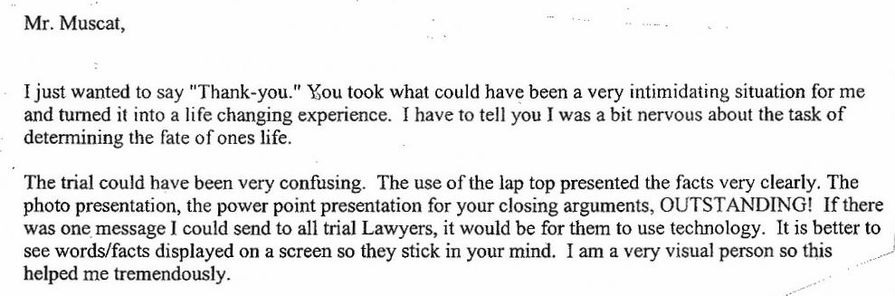
See below for an e-mail from a juror after a homicide trial.
|
Experience I have trained or served as a subject matter expert for the following agencies covering a wide array of topics including, but not limited to the visual trial, due process and technology, courtroom technology, criminal law, video evidence, digital evidence, and trial advocacy. American Bar Association Rule of Law Initiative (Cairo, Egypt) Alaska Department of Law-Criminal Division Association of Prosecuting Attorneys Career Prosecutors Advocacy Course County of Hawaii-Prosecuting Attorney Cross-Examination Trial Advocacy Course Department of Justice Detroit Sexual Assault Kit Summit Detroit Police Department Detroit Lions Professional Football Team Domestic Violence and Sexual Assault for the Prosecution Multidisciplinary Training Cook County District Attorney’s Office (Chicago) F.B.I. Violent Crime Conference F.B.I. C.A.S.T. Analysis School High-Tech Prosecutors Advocacy Course Idaho Prosecuting Attorneys Association Indiana Attorney General International Association of Prosecutors Illinois Office of States Appellate Attorneys Kentucky County Attorneys Association Kentucky Colonel Award Recipient Orange County (CA) District Attorney’s Office Michigan Defense Trial Counsel, Inc. Miller Canfield Law Firm National Association of Presiding Judges and Court Executive Officers National Black Prosecutors Association Naval Justice School (Rhode Island) National District Attorneys Association (NDAA)-multiple courses NAC Courtroom Technology Course North Carolina District Attorneys Association North Dakota State's Attorneys' Association New Mexico District Attorney's Association New York Prosecutors Training Institute McHenry County District Attorney Multidisciplinary Conference on Domestic Violence Northwestern District Attorney's Office Office of State's Attorney 1st Judicial Circuit (Tallahassee, FL) Oregon State Bar PAAM Visual Trial School PAAM Basic Training Course NDAA Prosecuting Sexual Assaults Trial Advocacy Course NDAA Prosecuting Homicides Trial Advocacy Course Rand Corporation (Arlington, VA) ROCIC 25th Annual Homicide Conference RTI International State of Maine Prosecutor's Association St. Clair Prosecutor’s Office Tennessee District Attorneys Association Texas District and County Attorneys Association United States Attorneys Office (Eastern District) United States Marine Corps Advocacy Training (Camp Lejeune) Violence Reduction Network Wayne County Medical Examiner’s Office West Virginia Prosecuting Attorney's Institute Summer Conference Wyoming County (NY) District Attorney’s Office |
Here is a paper that I recently helped draft with with the National District Attorneys Association, the Bureau of Justice Affairs, and the Department of Justice.
Video Evidence: A Primer for Prosecutors was developed for the purpose of educating prosecutors on the numerous sources of video evidence, the benefits of its use in court, and challenges faced by prosecutors’ offices in the handling of video evidence. A sample process flow is included as step-by-step guidance on the procedures a prosecutor may follow when preparing and handling video evidence. This process flow corresponds to a typical case flow, from receipt of evidence through the trial. The primer also includes a glossary of terms and list of recommended resources for further reading. https://it.ojp.gov/GIST/1194/Video-Evidence--A-Primer-for-Prosecutors
In 2013, I helped Sean Smith of the New York Prosecutors Training Institute draft Multitasking Ethics and Technology. .The full article is available via the National District Attorneys Association member website (volume 48-2014). Here is the intro from the article: A]ll attorneys must educate themselves about technology in order to meet their ethical obligations to clients. "The notation of just hanging a shingle and not taking time to understand the technology runs afoul with the (ethics) rules.” Federal Magistrate Judge John Facciola, from the District of Columbia, during E-Discovery for Federal Government Practitioners jointly produced by the Electronic Discovery Institute and Georgetown Law CLE. Rule 1.1 of the ABA Model Rules of Professional Conduct: "A lawyer shall provide competent representation to a client. Competent representation requires the legal knowledge, skill, thoroughness and preparation reasonably necessary for the representation." According to Facciola, competency now requires "a fundamental understanding of the way information is produced." This entails: 1) some understanding of the information systems you and your client are relying upon; 2) knowing your own limitations; and 3) if you don't understand, have someone at your side, i.e. an expert, who does. http://www.eddupdate.com/webinars_podcasts/ | ||
Subject matter expert for "Eight Tips to Using Technology To Persuade A Jury"
FOCUS ON WHAT YOU HAVE TO PROVE Patrick Muscat teaches visual trial courses at two Detroit-area law schools and lectures about this topic nationwide. He advocates for the use of technology to go over jury instructions during argument. "An advocate can display instructions to the jury and highlight how the evidence from the case meets and/or surpasses the elements found in the jury instruction." However, Muscat cautions against using visuals as analogies for legal theories. "No visual that explains reasonable doubt to a jury will be upheld by an Appellate Court. You are just asking for trouble if you try to create one."
epubs.iltanet.org/i/518940-litigation-and-practice-support-may-2015/37?
FOCUS ON WHAT YOU HAVE TO PROVE Patrick Muscat teaches visual trial courses at two Detroit-area law schools and lectures about this topic nationwide. He advocates for the use of technology to go over jury instructions during argument. "An advocate can display instructions to the jury and highlight how the evidence from the case meets and/or surpasses the elements found in the jury instruction." However, Muscat cautions against using visuals as analogies for legal theories. "No visual that explains reasonable doubt to a jury will be upheld by an Appellate Court. You are just asking for trouble if you try to create one."
epubs.iltanet.org/i/518940-litigation-and-practice-support-may-2015/37?